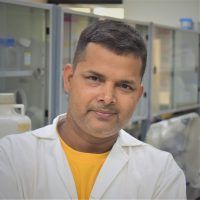
Dr. Soumya Iyengar
Scientist-VII / Senior Professor



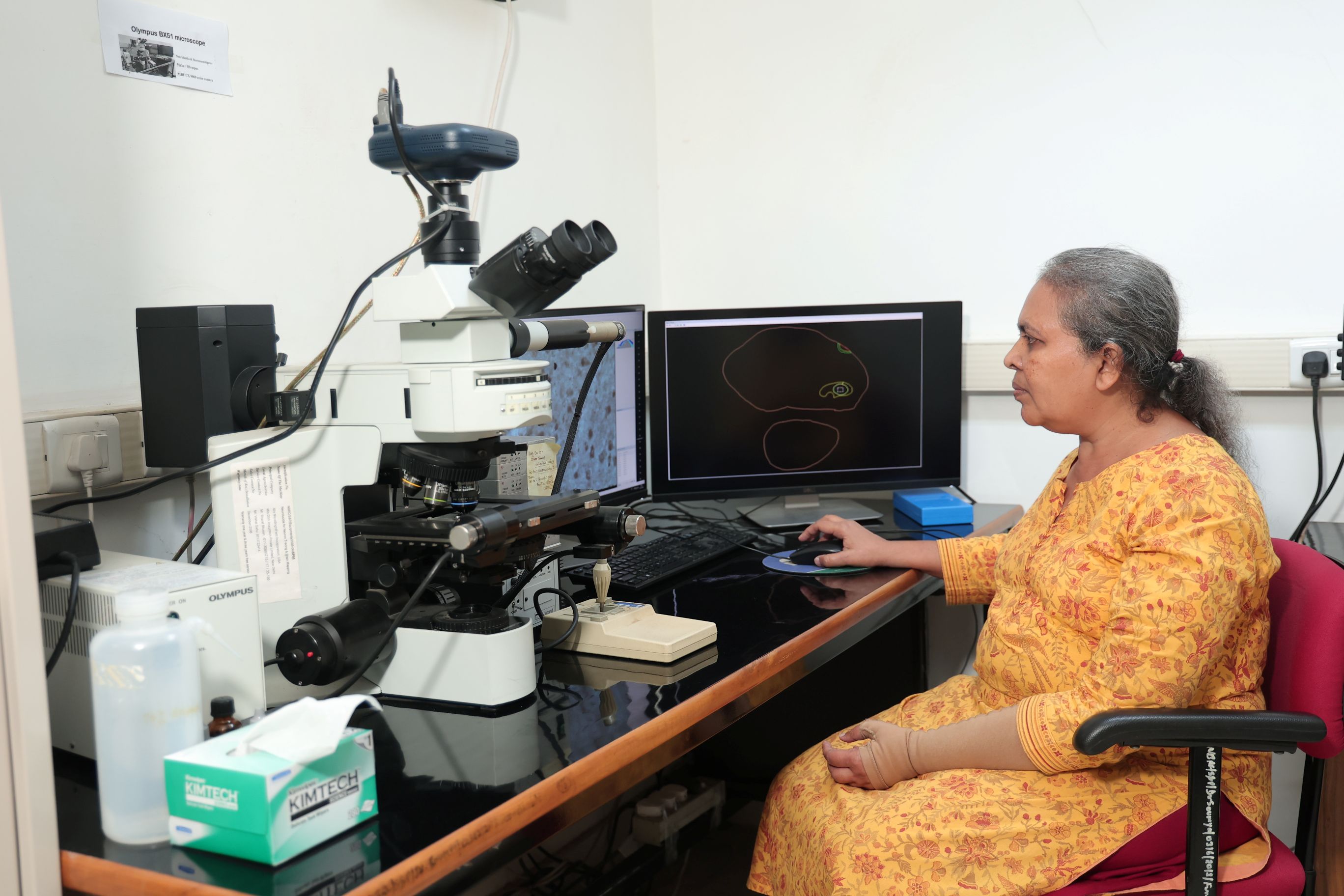
The main focus of our lab is the development of brain regions involved in speech and hearing. Both neuroanatomical and molecular techniques have been used to study the development of synapses and different cell types in post-mortem human brain samples of the auditory cortex across development. We also work on songbirds (zebra finches) which are vocal learners and excellent model systems to understand brain-behavior interactions leading to the formation of neural circuits involved in vocalization and vocal learning. Additionally, we work on house crows, which are model systems to understand the interplay between circuits underlying hearing, cognition and reward.
Research
Development of cytoarchitectonic features and axonal connections in cortical areas subserving speech and hearing: We are interested in understanding developmental changes in the microstructure of the human auditory cortex, from the preterm period until adulthood. Studies in my lab focus on delineating the subdivisions of the auditory cortex at different stages of development based on their cytoarchitecture using histological, immunohistochemical and molecular techniques on post-mortem brain tissue. Besides performing stereological measurements of different parameters such as neuron numbers in the primary and non-primary auditory cortices, we have been studying changes in excitatory and inhibitory synapses in these brain regions. We have recently explored the pruning and refinement of inhibitory interneurons in the auditory cortex to compare them with those in cases of speech and hearing disorders.
The role of the opioid system in singing and song learning in zebra finches: Male zebra finches (Taenopygia guttata) learn their songs from a tutor - typically their father - during a sensitive period early in development, making them excellent models for studying vocalization and vocal learning. We have been interested in studying their endogenous opioid system, which consists of the opioid peptides (β-endorphins, enkephalins and dynorphins,) and their receptors (µ-, δ- and κ-). Previous research from our lab demonstrated that blocking the opioid receptors, either systemically or specifically in song control regions, led to changes in the motivation of adult males to sing to females, and also altered the acoustic features of their songs. More recently, we have found that blocking the opioid receptors for a very short duration during the sensitive period alters different aspects of female-directed songs, once the birds attain adulthood. Current studies in the lab focus on whether blocking opioid receptors during the sensitive period affect other behaviors, besides singing and also if this manipulation leads to alterations in neural activity in the song control system.
Cognition in Crows: Another group of songbirds that we have been studying are house crows (Corvus splendens), which belong to the Corvidae family and are known for their remarkable cognitive abilities. Initial studies in the lab have focused on the basic structure and the organization of the dopaminergic system in the brain of these birds. We have also demonstrated that visual learning in house crows relies on a complex, brain-wide network and simultaneous mechanisms of neural plasticity, extending beyond the traditionally studied caudolateral nidopallium (NCL) or prefrontal cortex analogue in birds. Besides the NCL, learning the shape discrimination task activates the avian basal ganglia, and unexpectedly, vocal control regions. Furthermore, learning the task can be correlated with structural changes in the NCL, including neurite pruning in mature dopaminoceptive and immature neurons within the NC, in addition to triggering neurogenesis in NCL and in the medial striatum. For the first time, our research demonstrates the structural changes in the brain underlying a cognitive task associated with visual discrimination in corvids. We are currently interested in studying auditory discrimination in these birds.
-
Anjali, Pundir AS, Radotra B, Gupta K, Gupta S, Sharma M, Mylapalli JL, Lalwani S, Iyengar S “Developmental trajectories of somatostatin-positive interneurons in the human auditory cortex from migration to maturation” Communications Biology(2026) (2026)
-
Din U, Banerjee S, Iyengar S “Opioid Modulation of Differential Gene Expression and Neuronal Differentiation in the Ventricular-subventricular Zone of Adult Male Zebra Finches” Annals of Neurosciences(2026) (2026)
-
Singh A Utkarsha, Iyengar S “Delta opioid receptors affect acoustic features of song during vocal learning in zebra finches” BMC Neuroscience(2025) (2025)
-
Parishar P, Rajagopalan M and Iyengar S “Changes in the dopaminergic circuitry and adult neurogenesis linked to reinforcement learning in corvids” Frontiers in Neuroscience(2024) (2024)
-
Utkarsha A Singh, Soumya Iyengar “The Role of the Endogenous Opioid System in the Vocal Behavior of Songbirds and its Possible Role in Vocal Learning” Frontiers in Physiology(2022) (2022)
-
Pooja Parishar, Alok Nath Mohapatra, Soumya Iyengar “Investigating Behavioral Responses to Mirrors and the Mark test in adult male Zebra Finches and House crows” Frontiers in Psychology; 12:637850(2021) (2021)
-
Pooja Parishar, Neha Sehgal, Soumya Iyengar “The expression of delta opioid receptor mRNA in adult male zebra finches (Taenopygia guttata)” PLoS ONE (2021)
-
Sandeep Kumar, Alok Nath Mohapatra, Arvind Singh Pundir, Mukta Kumari, Uzma Din, Sudha Sharma, Atanu Dutta, Vasav Arora, Soumya Iyengar “Blocking Opioid Receptors in a Songbird Cortical Region modulates the Acoustic Features and Levels of Female-Directed Singing” Frontiers in Neuroscience(2020) (2020)
-
Kumar, Sandeep., Mohapatra, Alok Nath., Sharma, Hanuman Prasad., Singh, Utkarsha A., Kambi, Niranjan Ashok., Velpandian, Thirumurthy., Rajan, Raghav., Iyengar, Soumya “Altering Opioid Neuromodulation in the Songbird Basal Ganglia Modulates Vocalizations” Frontiers in Neuroscience(2019) (2019)
-
Sen, Shankhamala., Parishar, Pooja., Pundir, Arvind., Reiner, Anton., Iyengar, Soumya “The Expression of Tyrosine Hydroxylase and DARPP-32 in the House Crow (Corvus splendens) brain” Journal of Comparative Neurology(2019) (2019)
-
Singh, Utkarsha A., Iyengar, Soumya “The expression of DARPP-32 in adult male zebra finches (Taenopygia guttata)” Brain Structure and Function(2019) (2019)
-
Iyengar S, Parishar P, Mohapatra A N “Avian Cognition and Consciousness_From the Perspective of Neuroscience and Behaviour” In book: Self, Culture and Consciousness. Springer, Singapore (2018)
-
Kumar S and Iyengar S “Avian Striatal Complex” Encyclopedia of Animal Cognition and Behavior ; Vonk J., Shackelford T. (eds); Springer Nature Switzerland AG(2018) (2018)
-
Singh A Utkarsha, Kumari Mukta, Iyengar S “Method for improving the quality of genomic DNA obtained from minute quantities of tissue and blood samples using Chelex 100 resin” Biological Procedures Online : (2018)
-
Iyenger S., Parishar P. and Mohapatra A. N “Avian Cognition and Consciousness - from the Perspective of Neuroscience and Behaviour (Book Chapter)” Self, Culture and Consciousness: Interdisciplinary Convergences on Knowing and Being, 2:23-50(2017) (2017)
-
Pundir A. S., Singh U. A., Ahuja N., Makhija S., Dikshit P. C., Radotra B., Kumar P., Shankar S. K., Mahadevan A., Roy T. S. and Iyengar S “Growth and Refinement of Excitatory Synapses in the Human Auditory Cortex” Brain Struct Funct (2016)
-
Arvind Singh Pundir, Utkarsha A. Singh, Nikhil Ahuja,Sonal Makhija, P. C. Dikshit, Bishan Radotra, Praveen Kumar, S. K. Shankar, Anita Mahadevan, T. S. Roy, Soumya Iyengar “Growth and refinement of excitatory synapses in the human auditory cortex” Brain Structure and Function(2015) (2015)
-
Sharma J, Mukherjee D, Rao S, Iyengar S, Shankar SK, Satishchandra P and Jana NR “Neuronatin mediated aberrant calcium signaling and endoplasmic reticulum stress underlie neuropathology in Lafora disease. Journal of Biological Chemistry” Journal of Biological Chemistry(2013) (2013)
-
Iyengar S “Development of the Human Auditory System” Journal of the Indian Institute of Science(2012) (2012)
-
Haldipur P, Bharti U, Govindan S, Sarkar S, Iyengar S, Gressens P, Mani S “Expression of sonic hedgehog during cell proliferation in the human cerebellum” Stem Cells and Development(2011) (2011)
-
Haldipur P, Bharti U, Govindan S, Sarkar S, Iyengar S, Gressens P, Mani S “Preterm Delivery Disrupts the Developmental Program of the Cerebellum” PLoS One(2011) (2011)
-
Iyengar S “Comparative and Evolutionary Aspects of Cognition. Chapter 14 in” Nova Science Publications, Inc., New York. USA(2011) (2011)
-
Pundir AS, Hameed LS, Dikshit PC, Kumar P, Mohan S, Radotra B, Shankar SK, Mahadevan A, Iyengar S “Expression of Medium and Heavy Chain Neurofilaments in the Developing Human Auditory Cortex” Brain Structure and Function(2011) (2011)
-
Khurshid N, Hameed LS, Mohanasundaram S and Iyengar S “Opioid modulation of cell proliferation in the ventricular zone of adult zebra finches (Taenopygia guttata)” FASEB J(2010) (2010)
-
Khurshid N, Jayaprakash N, Hameed LS, Mohanasundaram S and Iyengar S “Opioid modulation of singing in male zebra finches (Taenopygia guttata)” Behav. Brain Res.(2010) (2010)
-
Khurshid N, Aggarwal V and Iyengar S “Expression of mu- and delta-opioid receptors in song control regions of adult male zebra finches (Taenopygia guttata)” Journal of Chemical Neuroanatomy(2009) (2009)
-
Tripathi A, Khurshid N, Kumar P, and Iyengar S “Expression of delta- and mu-opioid receptors in the ventricular and subventricular zones of the developing human neocortex” Neurosci. Res.(2008) (2008)
-
Iyengar S, Jain N, Qi HX and Kaas JH “Cortical and thalamic connections of the representations of the teeth and tongue in somatosensory cortex of new world monkeys” J. Comp. Neurol.(2007) (2007)
-
Karunakaran S, Diwakar L, Saeed U, Agarwal V, Ramakrishnan S, Iyengar S and Ravindranath V “Activation of apoptosis signal regulating kinase 1 (ASK1) and translocation of death-associated protein, Daxx, in substantia nigra pars compacta in a mouse model of Parkinson's disease: protection by alpha-lipoic acid.” FASEB J. (2007) (2007)
-
Kaas JH, Qi HX, Iyengar S “Cortical network for representing the teeth and tongue in primates” Anat Rec A Discov Mol Cell Evol Biol.(2006) (2006)
-
Iyengar S, and Bottjer SW “Development of Individual Axon Arbors in a Thalamocortical Circuit Necessary for Song Learning in Zebra Finches” J. Neurosci (2002) (2002)
-
Iyengar S, and Bottjer SW “The Role of Auditory Experience in the Formation of Neural Circuits Underlying Vocal Learning in Zebra Finches” J. Neurosci(2002) (2002)
-
Iyengar S, Viswanathan SS, and Bottjer SW “Development of Topography within Song Control Circuitry of Zebra Finches during the Sensitive Period for Song Learning” J. Neurosci.(1999) (1999)
-
Iyengar B, Subalakshmi R, Iyengar S, Murthy J “Melanotrophin Dependence of Proliferating Melanocytes In: Growth Disorders of the Pigment Cell” BI Churchill Livingstone, New Delhi.(1996) (1996)







● Effects of altering the levels of neuronal proliferation on the learning and production of song behavior in male zebra finches. Dept of Biotechnology, India (December 2007 – December 2010). Rs 31.41 Lakhs
● Opioid modulation of song in male zebra finches. Dept. of Science and Technology, India (June 2010 – December 2013) Rs 37.20 Lakhs
● Neurobiology and understanding Circadian system linkage of cognitive performance in an avian model system. Dept. of Science and Technology, India (January 2011 – January 2014). Rs 25.00 Lakhs
● Effects of the δ-Opioid Receptor System on Singing and Song Learning in Zebra Finches. Dept. of Science and Technology, India (Sept 2016 – Sept 2019). Rs 37.43 Lakhs
● The Sensitive Period of the Human Auditory Cortex – a Neuroanatomical Study. Indian Council of Medical Research, India (Sept 2019 – Sept 2022). Rs 42.09 Lakhs
● Exploring Auditory Perception in House Crows using functional Magnetic Resonance Imaging and Neuroanatomical Techniques. Dept. of Science and Technology, India (May 2020 – May 2023). Rs 37.22 Lakhs
● Funds from NBRC





Geetika Phukan
Msc Student
MSc Student (2005 - 2006)
Post Doctoral Fellow, Dept of Medicine, University of Alberta, Edmonton, Canada

Nazia Khursid
Phd Student
PhD student (2004 - 2010)
Senior Assistant Professor, Higher Education Department, Jammu and Kashmir Govt.

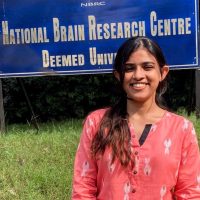
R. Madhumita
Msc Student
MSc Dissertation Student (2021 - 2022)
Doctoral Student, University of Pennsylvania


Risna Kr
Postdoctoral Fellow
JRF (2021 - 2023)
Doctoral student, Universite Laval Quebec Canada