
Dr. Vidhya Munnamalai
Scientist-IV / Associate Professor
Contact Information

Research
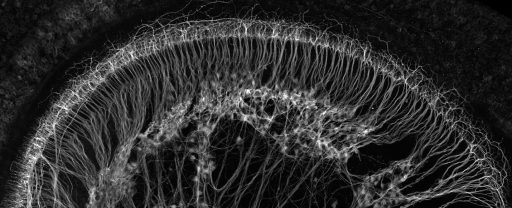
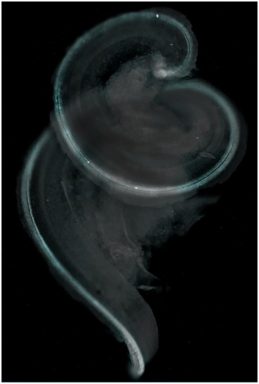
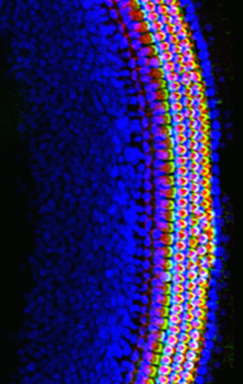
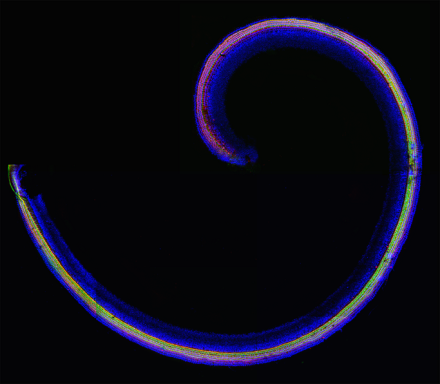
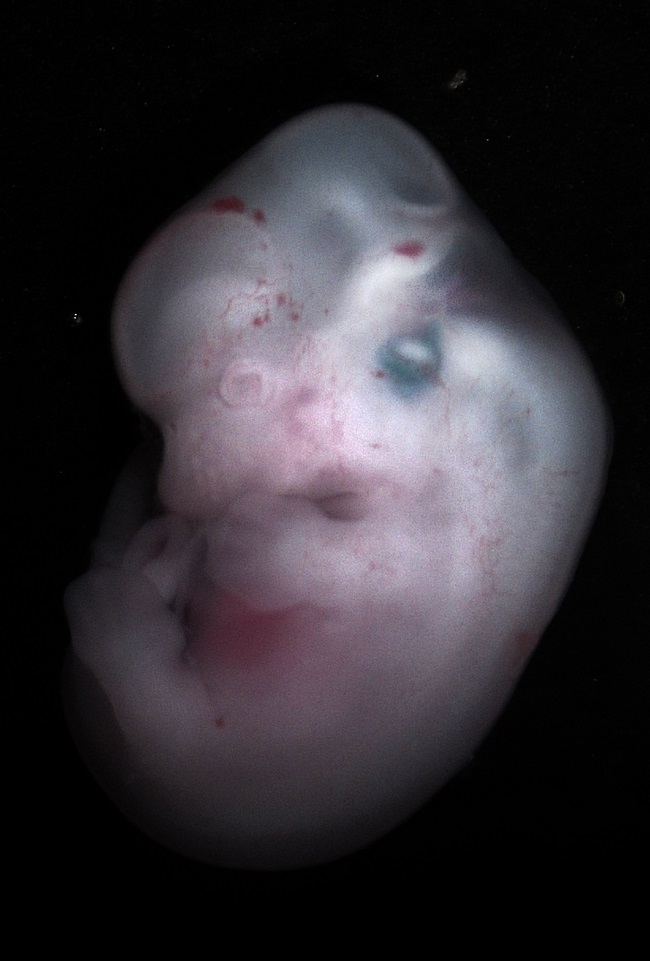
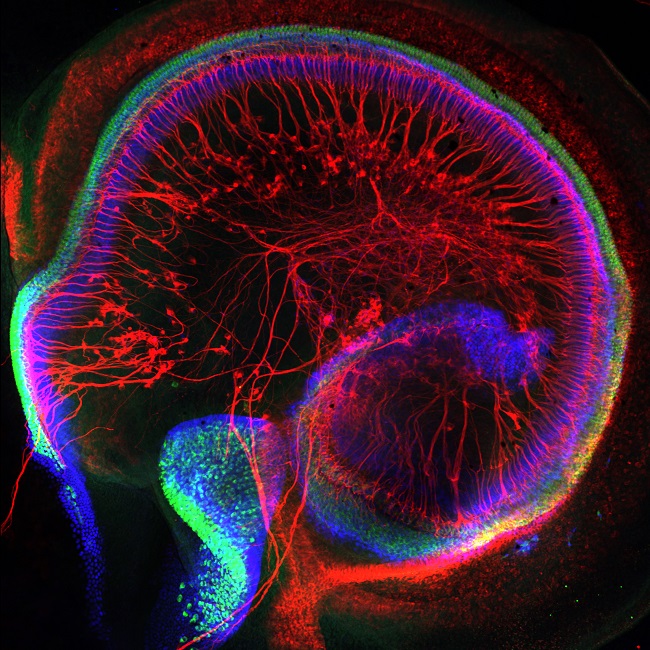
Our lab investigates the gene regulatory networks and the molecular mechanisms underlying neurodevelopment. Our model system is the mouse inner ear, which is an excellent model (the cochlea in particular), to study complex developmental patterning programs that determine stem cell population vs sensory cell fate vs other tissue types and the tight boundaries that form in between different epithelia. How these epithelia are tightly organized is essential for proper function.
Since the sensory progenitors exit the cell cycle early, there is no propensity for regeneration should the sensory cells get damaged or die. Thus, we study how developmental programs specify cochlear progenitors, how they maintain a healthy cell population of stem cells, via DNA repair pathways, so that we can push cells to re-enter the cell cycle for the purposes of cell regeneration.
At the same time, we will gain a better understanding of how disease occurs, which is essential for curing hearing loss. Hearing loss is an increasingly worrying problem as it is set to double by the year 2050. India alone is estimated to have 63 million people with hearing impairment. Hearing is not only an economic loss for the country, but individuals are prone to early onset of depression and dementia because they tend to isolate themselves due to their inability to communicate. Auditory function is also tied with other cognitive functions of the brain for overall brain health. Vestibular function is essential for balance and motor movement. Since several genes in the inner ear overlap with other types of nervous system tissues, vestibular and auditory defects are comorbidities with other neurological disorders.
-
Beaulac HJ and Munnamalai V “Localization of Cadherins in the postnatal cochlear epithelium and their relation to space formation” Developmental Dynamics (2024)
-
Young CA, Burt E, Munnamalai V “A cochlear progenitor pool influences patterning of the mammalian sensory epithelium” Development (2024)
-
Thompson MJ, Young CA, Munnamalai V.* and Umulis DM* “Early precision of radial patterning of the mouse cochlea is achieved by a linear BMP signaling gradient and is further refined by SOX2” Scientific Reports (2023)
-
Munnamalai V, Sammudin, NH, Young CA, Thawani A, Kuhn, RJ., Fekete, DM “Sensory cells of embryonic and neonatal mouse cochlea are susceptible to Zika virus infection” Viruses (2021)
-
Oliver BL*, Young CA* and Munnamalai V “Spatial and temporal expression of PORCN is highly dynamic in the developing mouse cochlea” Gene Expression Patterns (2021)
-
Munnamalai V* and Fekete DM “The acquisition of positional information across the radial axis of the cochlea.” Dev Dyn (2020)
-
Thawani A, Sammudin NH, Reygaerts HS, Wozniak AN, Munnamalai V, Kuhn RJ, Fekete DM “Zika virus can directly infect and damage the auditory and vestibular components of the embryonic chicken inner ear” Dev Dyn (2020)
-
Munnamalai V and DM Fekete “Building the human inner ear in an organoid” Nat Biotechnol (2017)
-
J Neurosci “Wnt9a Can Influence Cell Fates and Neural Connectivity across the Radial Axis of the Developing Cochlea” Munnamalai V et al. (2017)
-
Munnamalai V and Fekete DM “Organotypic Culture of the Mouse Cochlea from Embryonic Day 12 to the Neonate” Methods Mol Biol (2016)
-
Munnamalai V and Fekete DM “Notch-Wnt-Bmp crosstalk regulates radial patterning in the mouse cochlea in a spatiotemporal manner” Development (2016)
-
Munnamalai V, et al “Bidirectional interactions between NOX2-type NADPH oxidase and the F-actin cytoskeleton in neuronal growth cones” J Neurochem (2014)
-
Munnamalai V and Fekete DM “Wnt signaling during cochlear development” Seminars Cell Dev Biol (2013)
-
Munnamalai V, Hayashi T, and Bermingham-McDonogh OM “Notch prosensory effects in the Mammalian cochlea are partially mediated by Fgf20” J Neurosci (2012)
-
Decourt, B, Munnamalai V “Cortactin colocalizes with filopodial actin and accumulates at IgCAM adhesion sites in Aplysia growth cones” J Neurosci Res (2009)
-
Munnamalai V and D.M. Suter “Reactive oxygen species regulate F-actin dynamics in neuronal growth cones and neurite outgrowth” J Neurochem (2009)







No Alumni found.